UTM link generator
UTM link generator is a free tool that adds standard UTM parameters to a web address so visits from a campaign can be identified in analytics reports.
What is a UTM link and how is it structured?
A UTM link is an ordinary URL with campaign labels added as query parameters. UTM stands for Urchin Tracking Module, a naming system that was adopted by Google Analytics after Google acquired Urchin.
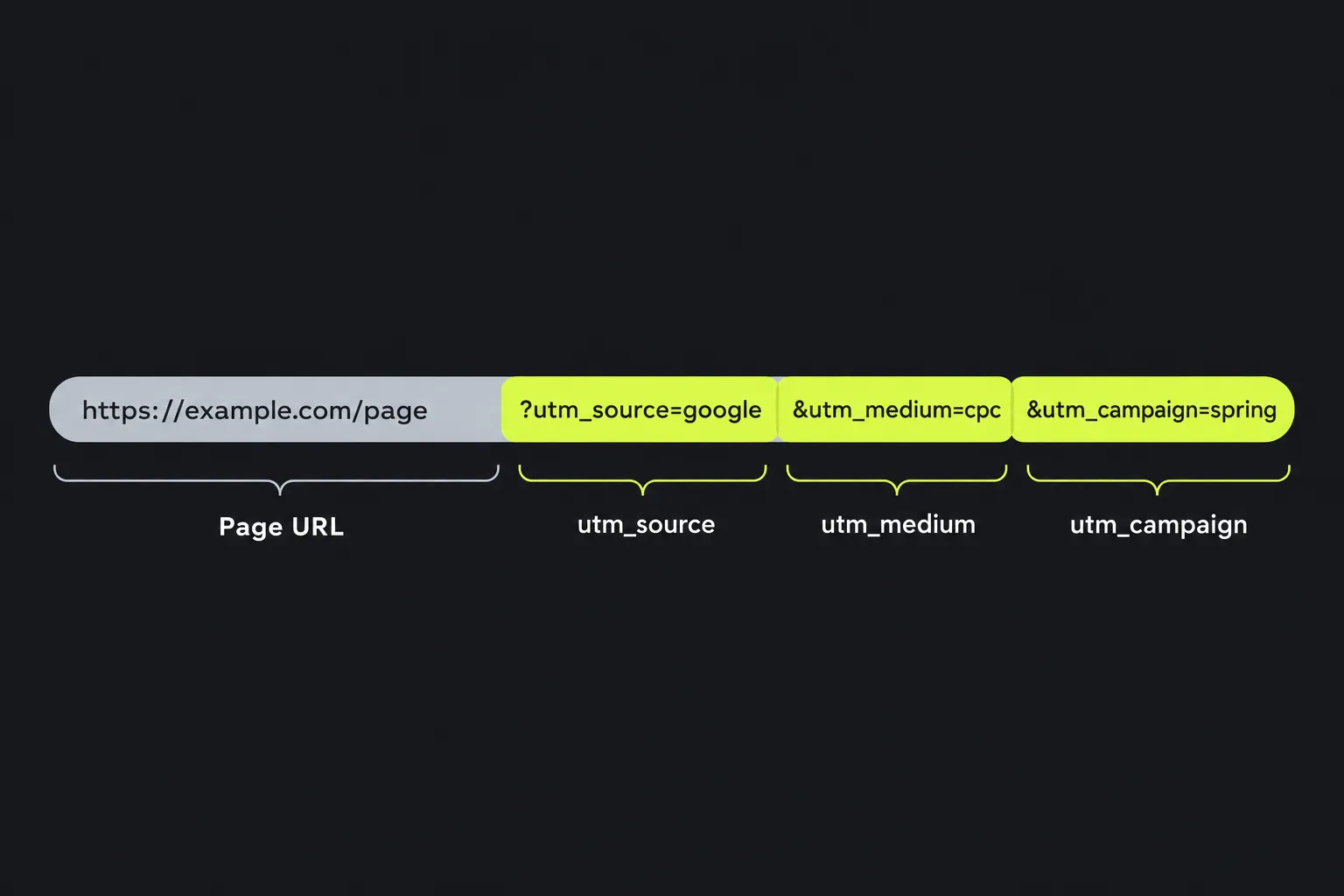
The parameters appear after a question mark in the URL. Each parameter has a name and a value, joined by an equals sign. Additional parameters are separated with an ampersand.
For example, a basic tracked link can look like this:
https://www.example.co.uk/offers?utm_source=newsletter&utm_medium=email&utm_campaign=summer_sale
The page itself is still https://www.example.co.uk/offers. Everything after the question mark supplies campaign information to an analytics system. UTM parameters do not create a separate page or change the page content by themselves.
If the destination URL already has a query string, add UTM parameters with an ampersand rather than a second question mark. A URL fragment beginning with # belongs at the end, after the query parameters.
The five UTM parameters
The generator provides fields for the five established UTM parameters. Their values should describe where a link is placed and why it exists.
- UTM Source becomes utm_source. Use it for the specific source sending traffic, such as google, linkedin, customer_newsletter or partner_site.
- UTM Medium becomes utm_medium. Use it for the broad marketing channel, such as email, paid_social, cpc, affiliate or qr_code.
- UTM Campaign becomes utm_campaign. Use it to group links belonging to the same activity, launch or promotion, such as autumn_sale_2026 or mortgage_guide_launch.
- UTM Content becomes utm_content. Use it to distinguish links that otherwise share the same source, medium and campaign. Examples include header_button, footer_text and blue_image.
- UTM Term becomes utm_term. It was originally intended for paid-search keywords. It can also hold another controlled label when a reporting plan requires one, but its meaning should be documented and used consistently.
Source, medium and campaign usually provide the main reporting structure. Content and term add detail when there are several versions of a link or a specific attribution requirement. Adding optional parameters without a clear purpose tends to produce cluttered reports.
How do I create a consistent UTM link?
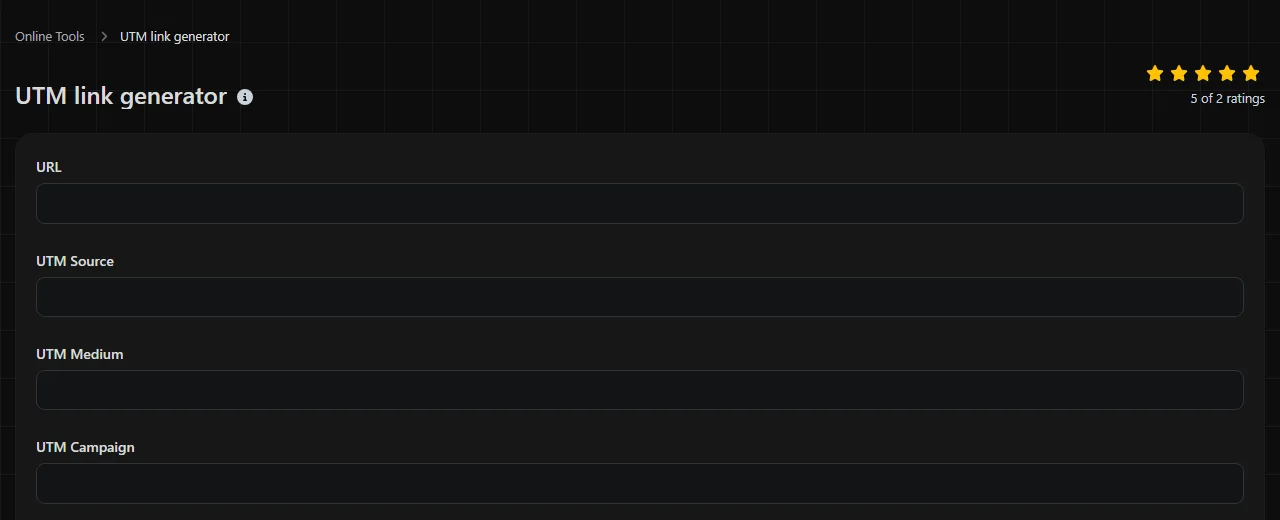
Choose the campaign labels before distributing the link, then enter them in the corresponding UTM fields and use the generated result wherever that campaign link is required.
- Start with the final destination page rather than a temporary or internal address.
- Enter the referring platform, publication or partner in UTM Source.
- Enter the channel category in UTM Medium.
- Give the activity a stable identifier in UTM Campaign.
- Use UTM Content only when you need to compare placements or creative versions.
- Use UTM Term where keyword or term-level reporting has a defined role.
- Copy the resulting link and check that it opens the intended page with the UTM parameters intact before publishing it.
Here is a worked example for a link in the main button of a September email campaign.
Destination: https://www.example.co.uk/guides/fixed-rate-savings
UTM Source: customer_newsletter
UTM Medium: email
UTM Campaign: september_savings_2026
UTM Content: main_button
UTM Term: left empty
The composed link is:
https://www.example.co.uk/guides/fixed-rate-savings?utm_source=customer_newsletter&utm_medium=email&utm_campaign=september_savings_2026&utm_content=main_button
Where will UTM results appear?
UTM values become useful in an analytics report after someone clicks the tagged link and the destination site records the visit. Analytics products commonly expose source, medium and campaign as acquisition dimensions, with content and term available for more detailed analysis where supported.
The parameters are also visible in the browser address bar and may appear in copied links, browser history, server logs and referral records. Anyone who receives or clicks the URL can read its UTM values, so do not put names, email addresses, customer numbers, confidential project titles or other sensitive information in them.
A UTM link contains the labels present on the incoming URL, which an analytics system may record. It does not guarantee that every visit will appear in a report. Tracking consent choices, analytics configuration, redirects, browser controls and filtering rules can all affect collection or attribution. Reporting interfaces also vary, so the exact report name depends on the analytics platform.
Which naming conventions keep campaign reports tidy?
Lowercase labels with no spaces are usually the safest choice because analytics systems may treat differently formatted values as separate entries. For example, Email, email and e-mail can create separate rows even though a person may regard them as the same medium.
- Choose one separator, such as underscores or hyphens, and use it throughout. Do not alternate between spring_sale and spring-sale.
- Keep source and medium distinct. A source might be linkedin, while the medium might be paid_social.
- Use durable campaign names. Dates can help when campaigns recur, preferably in an unambiguous format such as 2026_09.
- Avoid internal abbreviations unless everyone reading the reports understands them.
- Maintain a shared naming sheet when several people create links. A controlled list prevents variants such as newsletter, email_newsletter and crm_email.
Numbers are valid in parameter values, but labels such as campaign_1042 are hard to interpret without a campaign register. Spaces, ampersands, apostrophes, accented letters and non-Latin text can be represented through URL encoding, but readable ASCII labels are easier to copy, audit and compare. A space may appear as %20, while other characters can expand into longer encoded sequences.
Common mistakes and practical limits
UTM reporting problems can come from inconsistent labelling or from changing a redirect after its link has already been distributed.
- Using a second question mark. A destination URL that already contains parameters needs an ampersand before the first UTM parameter.
- Mixing capitalisation and spellings. Values such as Facebook, facebook and fb may be reported separately.
- Reusing content labels carelessly. If every button is labelled button, the value cannot distinguish a page header from an email footer.
- Tagging internal links. UTM parameters are intended mainly for incoming campaign traffic. Using them between pages on the same site can replace the original campaign attribution in some analytics configurations.
Parameters are visible to whoever clicks the link, so UTM tags are unsuitable for private data. Very long campaign names also produce long URLs that are awkward to paste and may be altered by messaging, advertising or publishing systems.
Building links individually does not scale well for a large campaign with many markets, adverts and creative variants. A spreadsheet can assemble URLs from controlled columns, while campaign management platforms can apply naming rules across larger batches. Manual generation remains useful for one-off UTM campaign links and for checking UTM link structures produced elsewhere.
Frequently asked questions
Can I use UTM parameters in a QR code?
Yes. Put the complete UTM-tagged URL into the QR code so scans arrive with the campaign labels attached. Keep the destination stable because changing the printed QR code later may be impractical, and test it on several phones before printing.
Do UTM links work with shortened URLs?
They can, provided the shortening service redirects to the full tagged destination without removing its query string. Create the UTM URL first and shorten that complete address, then follow the short link and inspect the final URL before publication.
Can UTM parameters identify an individual visitor?
Ordinary campaign-level UTM values do not identify an individual by themselves. Analytics software may combine campaign data with other permitted measurements, but personal identifiers should never be placed in UTM values.
What happens if a UTM field contains non-English characters?
URLs can carry accented and non-Latin characters through percent-encoding, usually based on UTF-8. The resulting link may be considerably longer and less readable, and reporting tools may preserve distinctions between visually similar Unicode characters. A documented transliteration scheme can make multinational campaign labels easier to govern.
Will UTM parameters survive a redirect?
Only if the redirect passes the query string to the final destination. Some redirect rules discard parameters or replace them with a new query string. Check the final browser address and confirm that a test visit reaches the expected analytics report before sending the link widely.
Should I add UTM tags to a Mailto or WhatsApp link?
Add UTM parameters to the web page being shared inside the message, rather than to the mailto: or WhatsApp link itself. A Mailto link generator or WhatsApp Link Generator can prepare the message link, while the tagged web URL remains the destination whose visits need measuring.
Popular Tools
Create your own custom signature and download it easily with our signature generator tool for personalized e-signatures.
Calculate the size of any text in Bytes (B), Kilobytes (KB), or Megabytes (MB) using our text size calculator tool.
Use the reverse IP lookup tool to find the domain or host associated with any IP address quickly and easily.
Use our ping tool to check the status and response time of any website, server, or port quickly and efficiently.
Digily Link's IP lookup tool provides detailed information about any IP address. Use this free online service to get comprehensive IP data.
Generate your free WhatsApp link instantly with our WhatsApp Link Generator. Add a custom message and start chats in one click. No login or coding required.