Old English text generator
Old English text generator is a free tool that converts ordinary text into decorative Old English-style Unicode characters for copying and pasting.
What does an Old English text generator create?
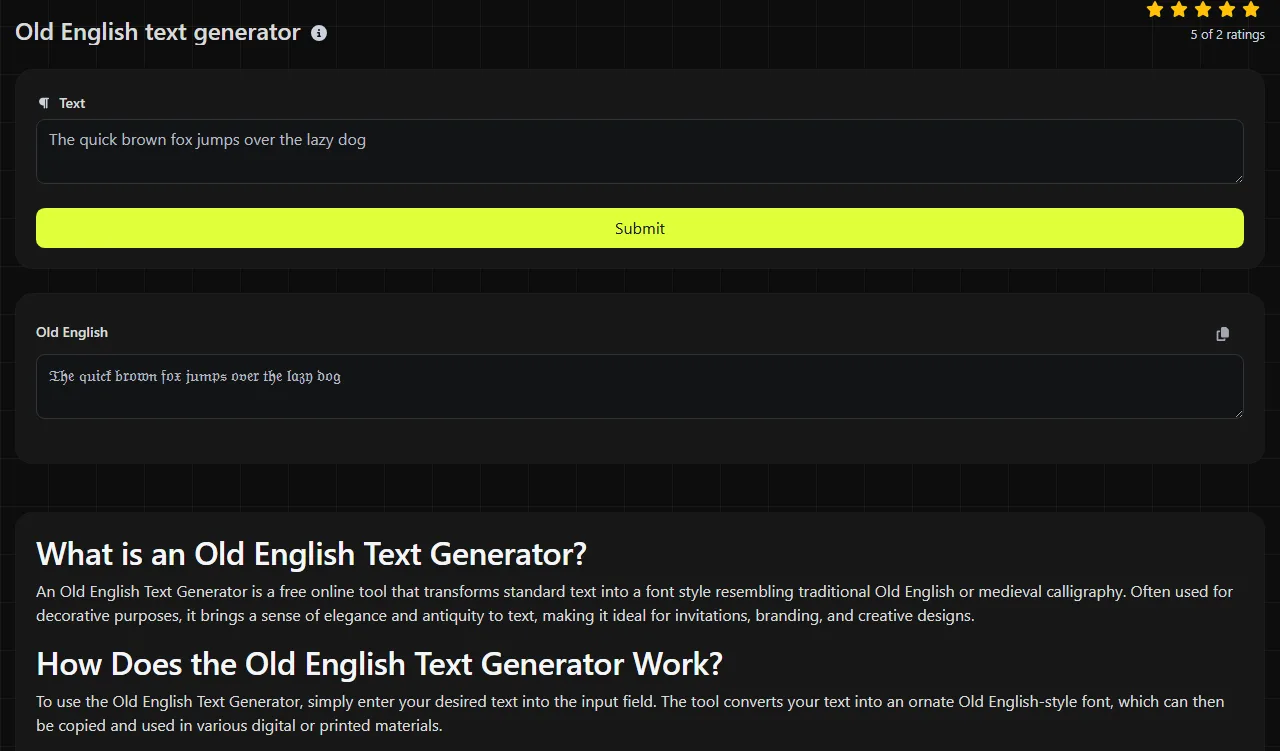
It creates stylised Unicode text that resembles blackletter or Fraktur lettering. The result is made from special characters rather than a downloadable font, so the decorative appearance remains when you paste it into many websites, messages and documents.
A typical conversion changes the alphabet while retaining the wording:
- Input: London
- Old English-style output: 𝔏𝔬𝔫𝔡𝔬𝔫
- Input: Sale 20
- Old English-style output: 𝔖𝔞𝔩𝔢 20
Numbers, spaces and punctuation may look unchanged because Unicode does not contain matching Old English-style versions of every character. The exact glyph shape can also vary slightly between devices and operating systems.
How do I use the Old English text generator?
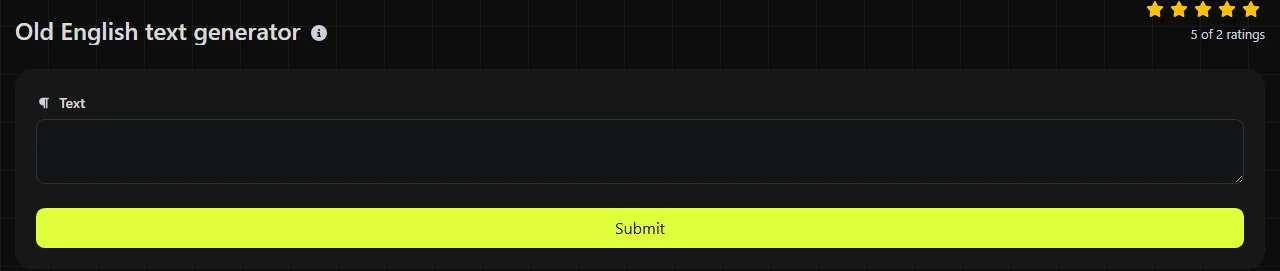
Enter your normal text, then copy the converted content from the result field labelled Old English.
- Type or paste the words you want to convert.
- Read the generated text in the Old English result.
- Copy it and paste it into the intended profile, post or document.
Keep the plain-text original until you have checked the final destination. This saves retyping when a platform rejects a character or makes the result difficult to read.
Where can I use Old English-style text?
You can use it in fields that accept Unicode text, particularly when a short heading, name or label needs a historical or gothic appearance.
- Instagram and TikTok: short profile text, captions or display names, subject to each field's current character rules.
- Discord: server descriptions, messages and some display-name fields. Username rules may be more restrictive.
- X: decorative display names or occasional words in a post. Check how the text counts towards the relevant field limit.
- Invitations and posters: headings for medieval, fantasy, Halloween or heritage-themed material prepared in Word, Google Docs or design software.
- Gaming communities: character names, guild labels and role-play text where the platform accepts the required Unicode characters.
Use decorative text sparingly in longer passages. Screen readers may announce the characters incorrectly, search engines may not treat them as ordinary letters, and copying them into forms or databases can produce unexpected matching results. A Cursive text generator is another option when a different decorative style suits the context.
Unicode limitations and awkward input
Old English-style Unicode works most consistently with basic Latin letters. Accented letters, non-Latin scripts, emoji and uncommon symbols do not all have matching Fraktur equivalents, so some characters may remain visually unchanged or appear in a mixed style.
Very long converted text can also run into limits imposed by the destination platform. Some systems count Unicode characters differently from plain ASCII letters, and older software may show empty squares or replacement symbols when it lacks suitable character support.
This output is unsuitable for body copy where accessibility or search visibility matters. It also does not install a font or apply formatting to the original text.
How is my text processed?
The text is processed on the server. Your input travels to the server over HTTPS and is not stored.
Even with that handling, avoid entering passwords, recovery codes, private keys or confidential personal information into the Old English text generator. Use ordinary placeholder text if you are preparing an Old English-style version of sensitive content.
Frequently asked questions
Does this translate modern English into historical Old English?
No. It changes the visual characters but does not translate vocabulary or grammar into Old English, the language used in early medieval England. Producing a historical translation requires linguistic knowledge rather than character substitution.
Can I paste the result into Microsoft Word or Google Docs?
Usually, provided the chosen document font and device support the Unicode characters. If boxes appear, try a font with broader Unicode coverage or replace the decorative text with ordinary letters before sharing the file.
Can I use Old English characters in an email address or web address?
Do not use them as a visual substitute for ordinary letters in an email address or URL. These identifiers have specific character and encoding rules, and a decorative character that resembles an English letter is still a different Unicode code point.
Which PHP function does the generator use to handle text length?
The server-side implementation calls mb_strlen.
Why is multibyte-aware length handling relevant?
Old English-style output uses Unicode characters, which can occupy more than one byte. PHP's mb_strlen handles multibyte text when measuring string length.
Popular Tools
Create your own custom signature and download it easily with our signature generator tool for personalized e-signatures.
Calculate the size of any text in Bytes (B), Kilobytes (KB), or Megabytes (MB) using our text size calculator tool.
Use the reverse IP lookup tool to find the domain or host associated with any IP address quickly and easily.
Use our ping tool to check the status and response time of any website, server, or port quickly and efficiently.
Digily Link's IP lookup tool provides detailed information about any IP address. Use this free online service to get comprehensive IP data.
Generate your free WhatsApp link instantly with our WhatsApp Link Generator. Add a custom message and start chats in one click. No login or coding required.